
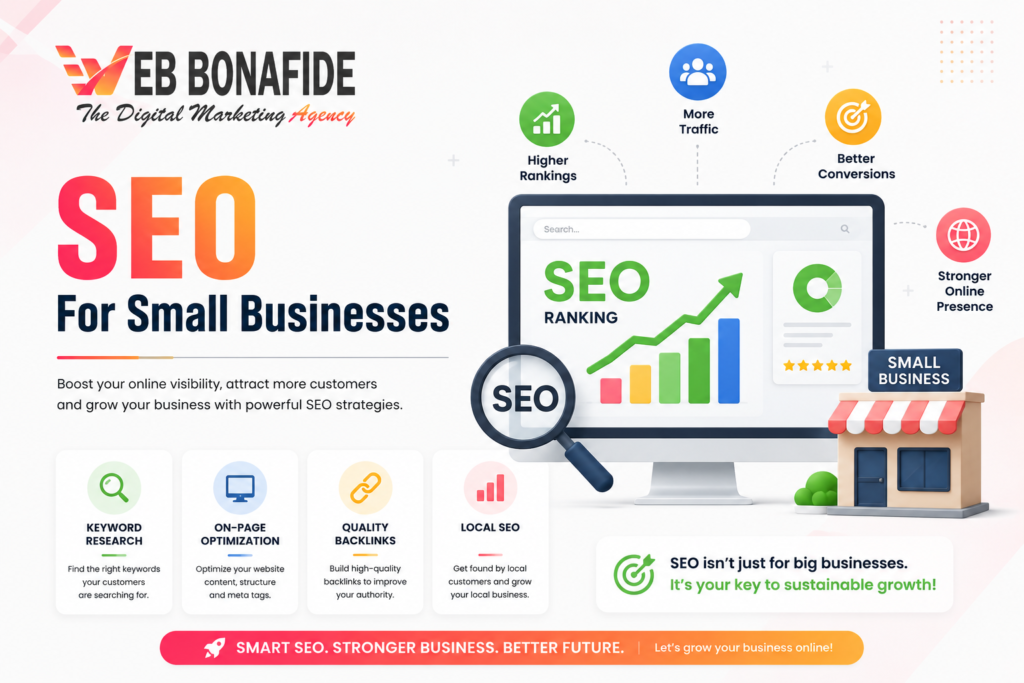
Have you ever searched for your own business on Google — and struggled to find it?
You know your service is excellent. Your customers appreciate what you do. You may have even invested in professional website design in Houston to create a beautiful, modern site.
But when someone searches for the exact service you offer, your competitors show up instead.
If that sounds familiar, you’re not alone. Many small business owners face the same challenge. The good news? The solution is not as complicated as it seems.
It starts with understanding SEO.
What Does SEO Stand For?
SEO stands for Search Engine Optimization.
If you’ve ever asked:
- What is SEO?
- What is SEO in digital marketing?
- What is SEO and how it works?
You’re asking the right questions.
In simple terms, SEO is the process of improving your website so it appears higher in search engine results when people search for products or services like yours.
That’s it.
SEO helps your business get discovered online — without paying for every click.
What Is SEO in Digital Marketing?
In the world of digital marketing, SEO plays a foundational role.
Imagine Google as a massive library. Every website is a book. SEO helps Google understand what your “book” is about so it can recommend it to the right readers.
When done correctly, SEO helps you:
- Attract organic (free) traffic
- Build credibility and trust
- Compete with larger companies
- Generate consistent leads
For small businesses, this can be a game-changer.
Benefits of SEO for Small Businesses
Small businesses often work with limited marketing budgets. That’s why SEO is so powerful.
Here are some key benefits of SEO for small businesses:
1. Long-Term Visibility
Unlike paid ads that stop the moment you pause your budget, SEO continues to drive traffic over time.
2. Better Quality Leads
People who find you through search are already looking for your service. That means they’re more likely to convert.
3. Increased Trust
Users tend to trust organic search results more than paid advertisements.
4. Competitive Advantage
With the right strategy, even a small local company can outrank larger competitors.
If you’ve invested in strong website design in Houston but haven’t optimized it for search engines, you may not be seeing the full return on your investment.
Why Is Local SEO Important for Small Businesses?
For local companies, local SEO is essential.
When someone types “best plumber near me” or “bakery in Houston,” Google prioritizes nearby businesses.
Local SEO helps you:
- Appear in Google Maps
- Show up in “near me” searches
- Increase calls and store visits
- Reach customers who are ready to buy
For many small businesses, local searches drive the majority of revenue. Ignoring local SEO means missing high-intent customers.
How to Improve SEO As a Small Business
Now let’s move from theory to action. Here are practical steps you can take to strengthen your SEO.
Make a Quality Website
SEO begins with your website.
A quality website should:
- Load quickly
- Be mobile-friendly
- Be easy to navigate
- Clearly explain your services
- Include strong calls to action
Good website design in Houston isn’t just about aesthetics. It’s about performance and user experience. Search engines reward websites that are helpful and easy to use.
Set Up Google Analytics and Google Search Console
If you’re serious about SEO, you need data.
- Set Up Google Analytics and Google Search Console to track traffic, search performance, and user behavior.
- These free tools help you understand what’s working and where improvements are needed.
Without tracking, you’re guessing. With data, you’re making informed decisions.
Set Up a Google Business Profile
If you serve a local area, this is critical.
Setting up a Google Business Profile allows you to:
- Appear in local map results
- Collect customer reviews
- Display business hours and contact details
- Increase credibility
This is one of the simplest and most effective steps in local SEO.
Do Basic Keyword Research
Keyword research helps you understand what your customers are searching for.
For example, instead of targeting a broad phrase like “marketing services,” you might focus on “best SEO for small businesses in Houston.”
Tools like Google Keyword Planner can help you discover relevant search terms.
When you understand your audience’s search behavior, you can create content that answers their questions directly.
Optimize On-Page Elements
On-page optimization includes:
- Writing clear page titles
- Crafting compelling meta descriptions
- Using headings properly
- Including relevant keywords naturally
- Optimizing images
This helps search engines understand your content while improving user experience.
Create Relevant, High-Quality Content
One of the most powerful SEO strategies is content creation.
You can:
- Write blog posts answering common customer questions
- Share industry insights
- Publish how-to guides
- Highlight customer success stories
Fresh, helpful content signals to search engines that your website is active and valuable.
More importantly, it positions you as an expert in your field.
Incorporate a Link-Building Strategy
When other reputable websites link to your site, it boosts your credibility in the eyes of search engines.
Ways to build links include:
- Partnering with local organizations
- Writing guest articles
- Getting listed in trusted directories
- Participating in community events
Link building takes time, but it strengthens your overall SEO foundation.
Take Advantage of Local SEO
To maximize local visibility:
- Include your city naturally throughout your website
- Create location-specific service pages
- Encourage satisfied customers to leave reviews
- Ensure your business information is consistent across platforms
If your business relies on local customers, this step is essential.
Measure and Track SEO Performance
Finally, remember that SEO is not a one-time task.
You should:
- Monitor traffic trends
- Track keyword rankings
- Analyze conversions
- Adjust your strategy regularly
Consistent evaluation ensures long-term success.
What Is SEO and How It Works — Simplified
To summarize:
- You build a strong, user-friendly website.
- You research and use the right keywords.
- You optimize your content and technical elements.
- Search engines crawl and understand your site.
- Your website appears in relevant search results.
That is what SEO is and how it works.
It’s about visibility, relevance, and trust.
Final Thoughts
Running a small business is demanding. You manage operations, customer service, finances, and growth — often all at once.
SEO may seem like just another responsibility, but it’s one of the most powerful long-term investments you can make.
When combined with strong website design in Houston, a well-planned SEO strategy helps turn your website into a consistent source of leads and sales.
If you’re ready to improve your online visibility, start with the basics outlined above. Take one step at a time. And if you need guidance, consider working with professionals who understand both design and search strategy.
Your business deserves to be found — and SEO helps make that happen.